


 English
 عربى


NEWS
Home / News / Industry News / How to Evaluate Ultrasonic Welding Machine Manufacturers Before You Buy
How to Evaluate Ultrasonic Welding Machine Manufacturers Before You Buy
Content
When a purchasing team shortlists ultrasonic welding machine manufacturers, the natural instinct is to compare frequency, power, and price per kilowatt. Those numbers matter, but they rarely expose the capability gap that decides project success: whether the supplier can integrate the welder into your production line, deliver tooling that maintains weld consistency, and support you when rejection rates climb. The evaluation should start with the supplier's engineering structure, not the datasheet.
What separates a manufacturer from a reseller
The market contains genuine machine builders, assembly-only suppliers, and trading companies that label imported or generic machines with their own brand. Each can deliver a working ultrasonic welder, but machine builders and assembly-focused suppliers differ from traders in one critical respect: the ability to adapt the machine to your workpiece geometry, material formulation, and cycle-time target.
A true manufacturer usually shows four characteristics:
- In-house design of the ultrasonic stack: generator, transducer, booster, and horn are matched as a system rather than sourced as separate off-the-shelf components.
- Process knowledge across multiple joining techniques: ultrasonic welding, hot-melt, hot-plate, hot-riveting, high-frequency welding, and eddy-current sealing. That breadth matters because the optimal process for your part may involve more than ultrasonics alone.
- Custom automation capability: the welder can be embedded into a rotary table, an in-line conveyor, or a multi-station assembly machine with vision inspection or leak testing.
- Tooling design and manufacturing: horns, jigs, and fixtures are machined, heat-treated, and validated in-house so that weld quality does not depend on subcontracted guesswork.
When a supplier can demonstrate all four, it positions itself as an engineering partner rather than a box-mover. That distinction becomes visible early in the quotation process: the partner asks about your material grade, part support geometry, and dimensional tolerances; the box-mover asks about your budget and lead time.
Technical evaluation criteria that predict weld quality
Even with a capable manufacturer, you still need objective criteria to compare proposals. The table below summarizes the areas that have the largest effect on sustained weld quality.
| Evaluation area | What to verify | Why it matters |
|---|---|---|
| Generator and frequency tracking | Automatic frequency search and amplitude control across temperature drift | Horn impedance changes as the stack warms up; without feedback, welds drift during a shift. |
| Force and collapse control | Down-speed, trigger force, and weld-by-distance or weld-by-time modes | Consistent part dimensions depend on controlling melt collapse, not just delivered energy. |
| Horn and fixture design | Material selection, tuned dimensions, and quick-change mounting | A poorly tuned horn causes overheating, stress cracks, and inconsistent weld strength. |
| Automation interface | PLC communication, I/O mapping, and integration with existing line controllers | Good interface design reduces integration cost and commissioning time on your floor. |
| Traceability and data logging | Weld parameter storage, alarm history, and export formats | Medical, automotive, and regulated industries require batch-level documentation. |
Approximate influence of each factor on ultrasonic weld consistency
Ask for weld samples produced with the exact horn and fixture design that will be quoted. Many experienced manufacturers, including Kunshan Shifuda Automation Technology, will run test welds on your actual parts before committing to a proposal. If a supplier refuses or lacks the equipment to do so, treat that as a serious risk.
Automation integration is part of the machine
An ultrasonic welding machine rarely operates alone in modern production. In automotive interiors, medical disposables, and filter products, the welder is usually one station inside a larger assembly system: parts are loaded, positioned, welded, leak-tested, and ejected automatically. That makes the manufacturer's automation experience inseparable from the quality of the welding equipment itself.
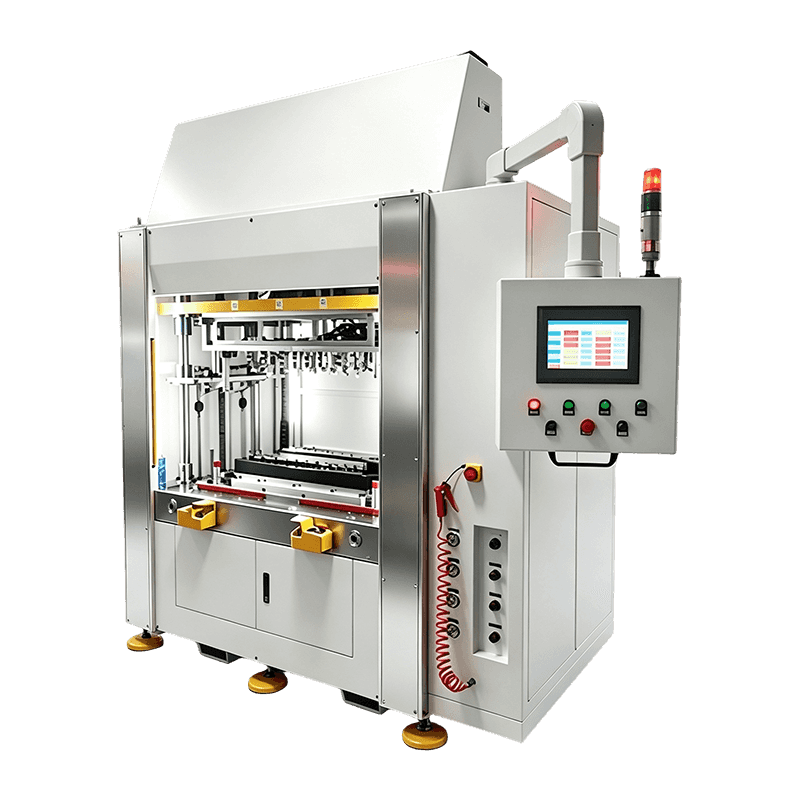
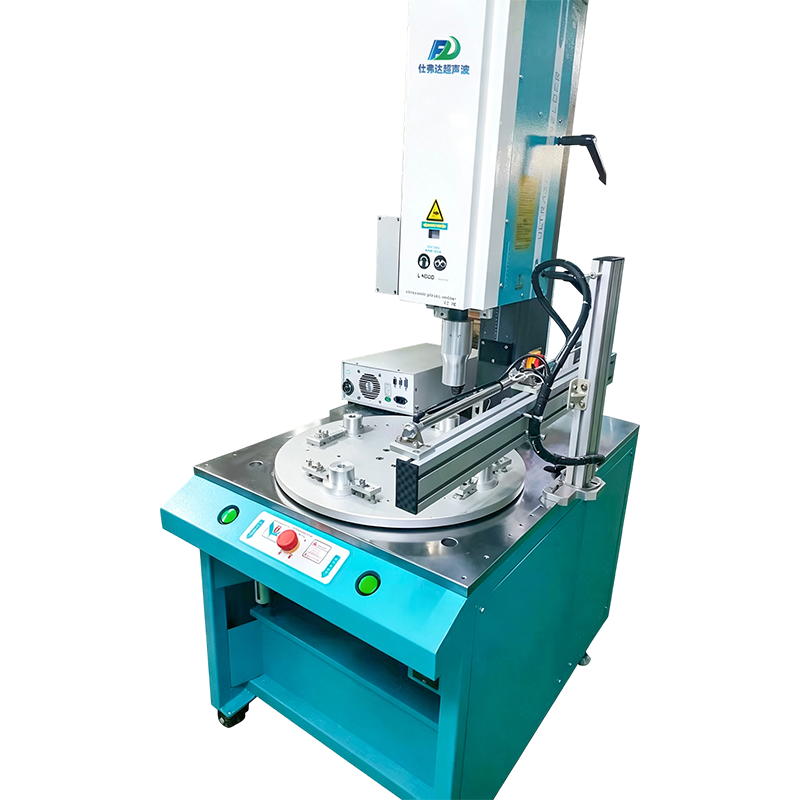 High-Power Ultrasonic Plastic Welding Machine with Digital ControlThis ultrasonic welder delivers high output for large thick-walled parts and integrates easily into automated assembly lines, making it a strong choice when you need both welding performance and unified automation responsibility.View Product →
A supplier that designs its own ultrasonic plastic welding machines, and its own non-standard automation lines, can close the gap between the welding stack and the surrounding mechanics. The same team that tunes the horn can design the part feeder, the clamping mechanism, and the downstream inspection station. Unified responsibility shortens commissioning time and eliminates the classic finger-pointing scenario, where the welding-machine supplier blames the automation integrator, and the integrator blames the machine.
Tooling and fixture engineering determines consistency
Tooling is where ultrasonic welding projects succeed or fail. The horn, fixture, and positioning jig control how much energy reaches the joint line and how repeatably parts are placed. A change in gate position on an injection-molded part, a slight warpage shift, or a different resin lot can all change the weld result. Manufacturers that design fixtures with quick-change features and precision alignment make your maintenance team's work dramatically easier.
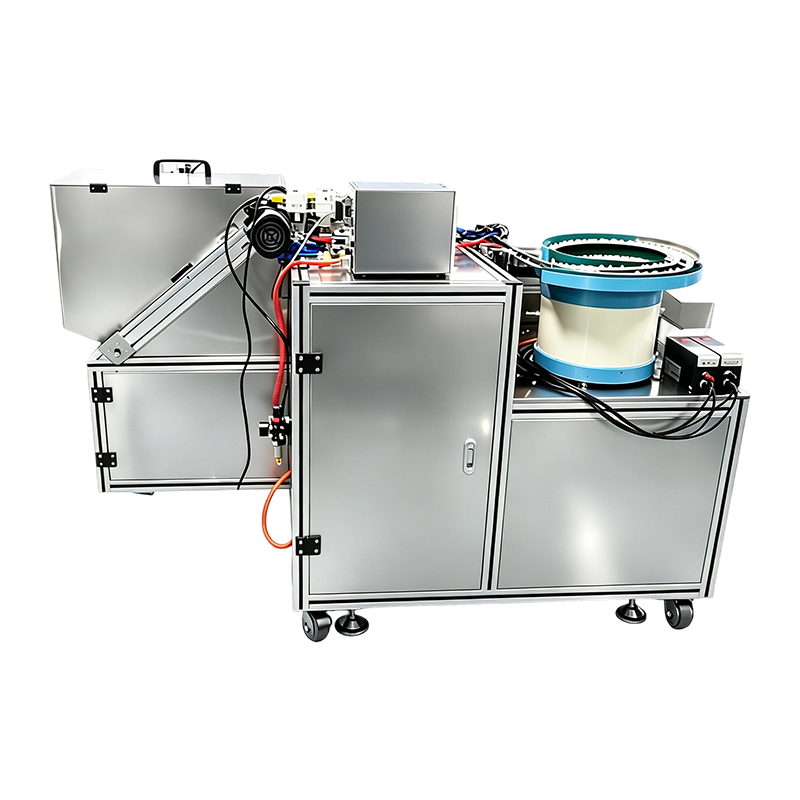
 Quick-Change Modular Production Jig for Frequent Part SwitchesThis tool-ready jig shortens changeover time by letting operators swap locating modules without extra tools, ideal for multi-variety, small-batch production where precision alignment and quick adjustment are critical.View Product →
In practical terms, look for a supplier offering precision positioning jigs, universal tooling jigs, and custom assemblies as part of the original quotation. If tooling is negotiated only after several rounds of back-and-forth, your commissioning timeline is already at risk.
Industry experience shortens the learning curve
Experience in your industry is not a soft credential; it directly affects the manufacturer's ability to anticipate weld anomalies and plan the right validation steps. Compare welding a PVC drip chamber for medical use with welding a polypropylene automotive trim panel. The medical device demands process validation, traceability, and particulate control; the automotive part demands cycle time, load-holding, and surface appearance. A manufacturer that has already built systems for medical device assembly can translate those requirements into machine specifications faster than a generalist.
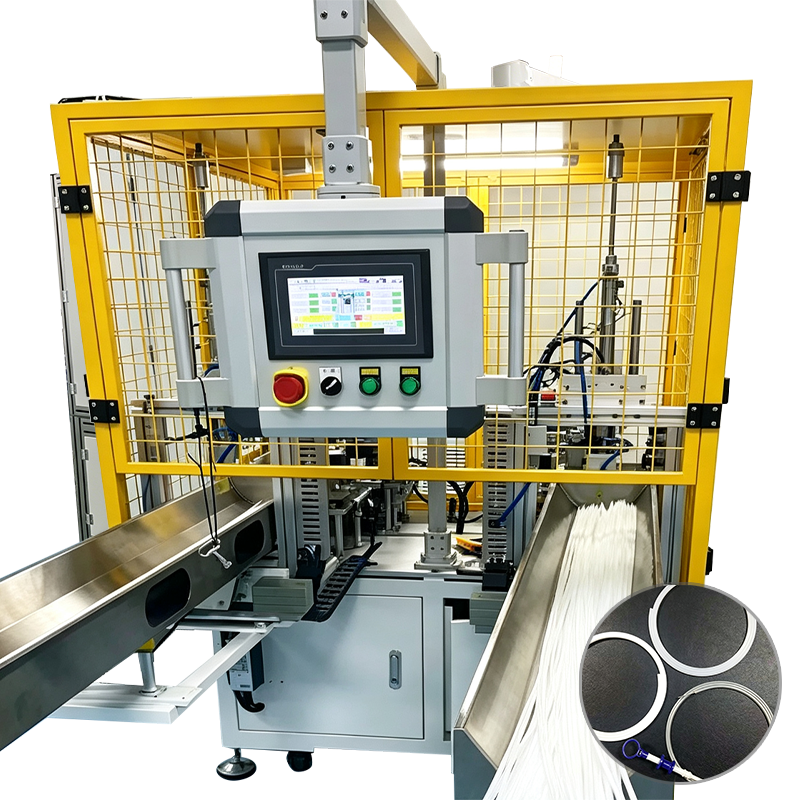
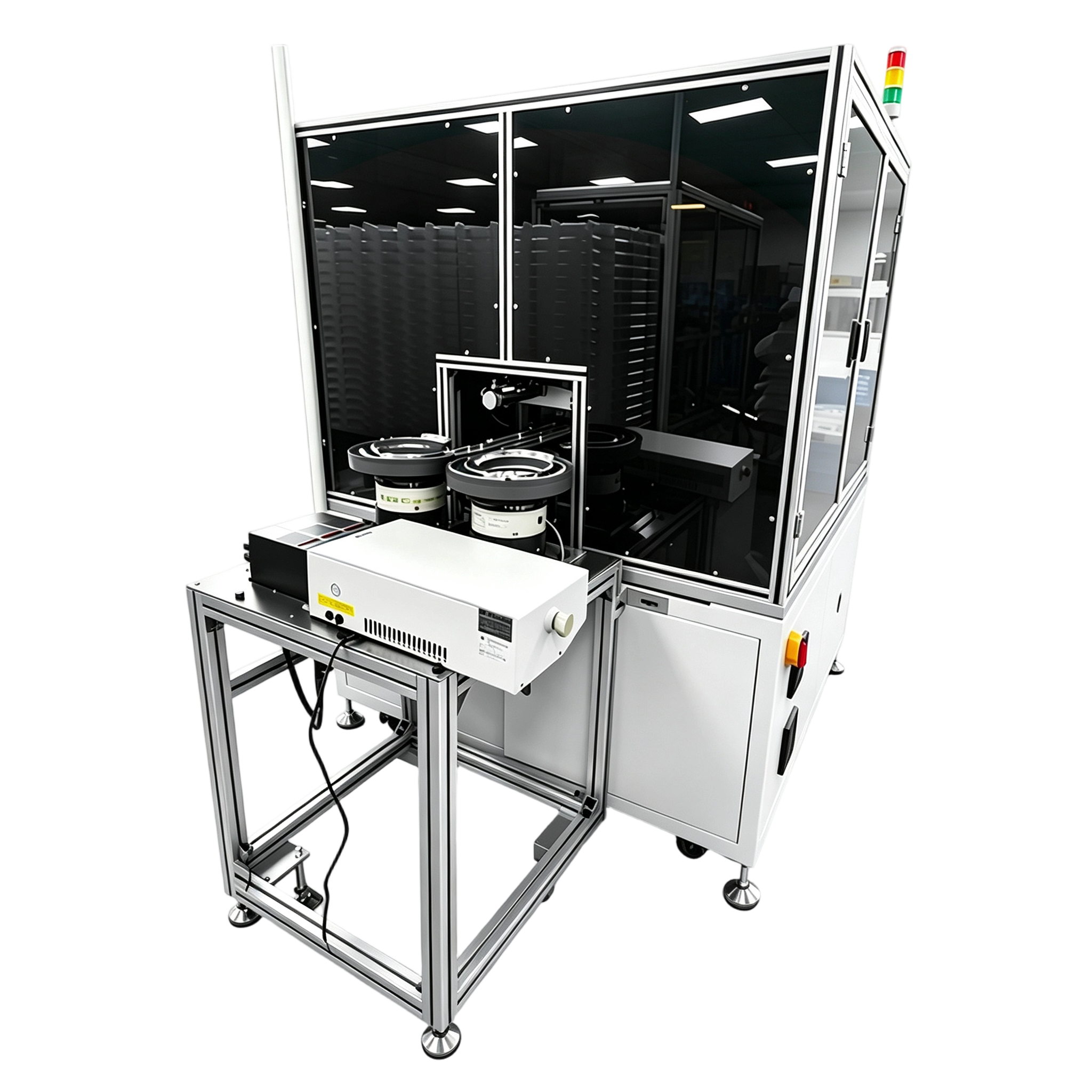 Automated Blood-Return Needle Assembly and Welding EquipmentPurpose-built for cleanroom assembly of blood-return needles, this machine combines joining, sealing checks, and high throughput to ensure consistent weld strength and reduced contamination risk in medical production.View Product →
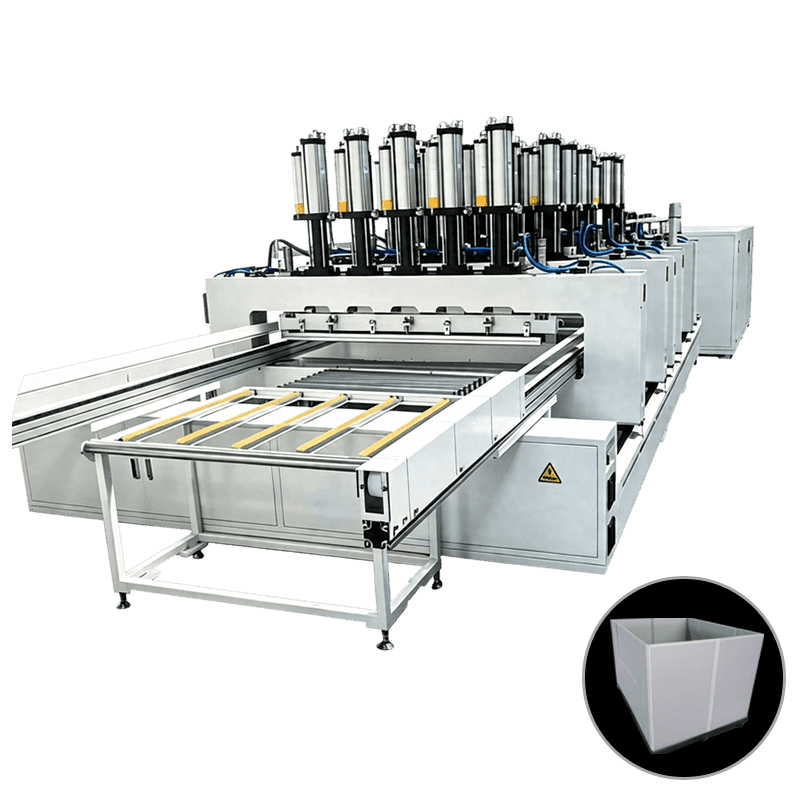
The same logic applies to environmental and filtration products, where membrane welding machines must handle thin, delicate films without burn-through, and to logistics products such as collapsible pallet box production equipment, where large weld areas demand even energy distribution. When you evaluate suppliers, the fastest way to gauge industry fit is to ask for reference lines that run the same family of parts.
Red flags and questions that expose them
Some warning signs appear before any contract is signed:
- The supplier quotes only a standard machine with no mention of fixture design or process validation.
- The supplier cannot produce weld samples, or application engineers avoid technical discussion.
- The horn and fixture are excluded from the machine quotation, leaving you to find a tooling shop on your own.
- The supplier has no documentation structure for parameter settings, maintenance intervals, or spare parts lists.
To move every candidate to the same level of transparency, ask these four questions:
- Which ultrasonic frequencies do you support, and how do you choose between 15 kHz, 20 kHz, 30 kHz, and 35 kHz for a given material and wall thickness?
- Will you weld our actual parts with the proposed horn and fixture before we place the order?
- How do you handle amplitude control as the transducer warms up, and what safety limits are built into the generator?
- Can the machine connect to our PLC or MES network, and what data can it export?
A supplier that answers with concrete parameter data rather than marketing language is showing the engineering maturity your project needs. If you want to understand the mechanism behind those parameters, read our detailed guide on how ultrasonic welding works.
The best ultrasonic welding machine manufacturer for your project is not necessarily the largest brand; it is the one that can prove that its welding stack, tooling, automation, and service are engineered as one system. Start with the four capability areas described above: design ownership, process breadth, automation integration, and tooling. Then use sample welds and technical questioning to verify those capabilities on your actual parts. The data you collect during that process will forecast your line's uptime more accurately than any brochure.
PREV:How to Choose the Right Ultrasonic Welding Machine Supplier for Your Factory
NEXT:How to Choose an Automation Equipment Manufacturer: A Buyer's Guide for Engineers
NEXT:How to Choose an Automation Equipment Manufacturer: A Buyer's Guide for Engineers
NEWS
News & Updates
-
You have received three quotations for an ultrasonic plastic welder. The frequencies look similar, ...
READ MORE -
In short: an ultrasonic welding machine joins materials by converting high-frequency electrical ener...
READ MORE -
When a production engineer watches a new ultrasonic welding station reject 12 percent of thin-walle...
READ MORE -
What Happens During Plasma Cleaning Plasma cleaning removes organic residues, oxide layers and micr...
READ MORE
 Ready To Customise
Your Products?
-
Kunshan Shifuda Automation Technology Co., Ltd.
-
Quick Links
Home Products About Us Application News Contact Us -
Product Categories
Water Treatment Membrane Filtration Equipment Logistics and Transportation Equipment Medical Consumables Equipment Ultrasonic Welding Machine Non-standard customization Plasma Cleaning Machine -
Contact Us

Mobile: +86 15821087903

Tel: +86 0512-36839705

Email: kellymeng@sfdauto.com

Add:No. 53, Changshun Road, Zhangpu Town, Kunshan City
Copyright © 2026 by
Kunshan Shifuda Automation Technology Co., Ltd.
All Rights Reserved.
Custom Industrial Automation Welding Equipment Manufacturers
