

 English
 عربى


NEWS
Home / News / Industry News / How to Choose an Automation Equipment Manufacturer: A Buyer's Guide for Engineers
How to Choose an Automation Equipment Manufacturer: A Buyer's Guide for Engineers
Content
When a production engineer watches a new ultrasonic welding station reject 12 percent of thin-walled pipettes on the first shift, the conversation stops being about machine specs. It becomes about process control, tooling geometry, and whether the equipment builder has joined parts like yours before. The same story repeats across medical, automotive, and water treatment plants whenever a machine is bought on price alone and delivered without process depth.
The most dependable way to evaluate automation equipment manufacturers is to look at four things: the breadth of joining and surface treatment processes they control in-house, the vertical industries they can reference, the depth of their custom tooling engineering, and the service structure behind the machine. A supplier that is weak in even one of these raises your total cost of ownership, regardless of how attractive the initial quotation looks.
What a Capable Automation Equipment Manufacturer Should Prove Up Front
Automation equipment is a broad label. A builder of packaging lines may have no useful experience with ultrasonic welding of medical consumables, and a robot integrator may never have tuned a hot plate weld. The first screen in any sourcing process should therefore be process-related: which joining, forming, surface treatment, and inspection processes does the manufacturer actually control in-house?
Consider ultrasonic welding as an example. The amplitude delivered to the horn, the pneumatic pressure applied to the part, and the total energy input determine whether a joint is strong, cosmetically clean, or full of micro-cracks. A manufacturer with a documented process library can set those parameters from experience instead of trial-and-error on your production floor. The same logic applies to hot plate welding of large membrane components, heat staking of automotive clips, and plasma treatment before adhesive bonding or printing.
The table below summarizes the capabilities worth checking before a supplier makes your shortlist.
| Capability | Why it matters | What to verify |
|---|---|---|
| Joining processes | Ultrasonic welding, hot melting, hot riveting, and heat staking determine joint strength and appearance. | Ask for sample welds on your material and a documented parameter window. |
| Surface treatment | Plasma cleaning raises surface energy for bonding and printing. | Request contact angle measurement data, not just a visual check. |
| Assembly and handling | Part feeding, clamping, and alignment drive cycle time and rejects. | Watch the machine run your parts at your tolerances. |
| Inspection and leak testing | Catches defects before they reach your customer. | Ask for test records and calibration methods. |
Use material-specific questions when you talk to candidates. If you are welding PP, PE, ABS, or nylon, ask how the manufacturer sets amplitude, pressure, and energy, and whether they document weld recipes for each material grade. For plasma treatment, ask how they verify results; a contact angle measuring instrument gives numbers you can audit, while a subjective water break test does not.
Tooling is another part of the process. The horn, anvil, and locating jig decide how the ultrasonic energy reaches the joint. If the manufacturer designs and machines its own jigs, you get faster iteration during development and easier rework later. If tooling is bought from outside, you add lead time and lose control over quality.
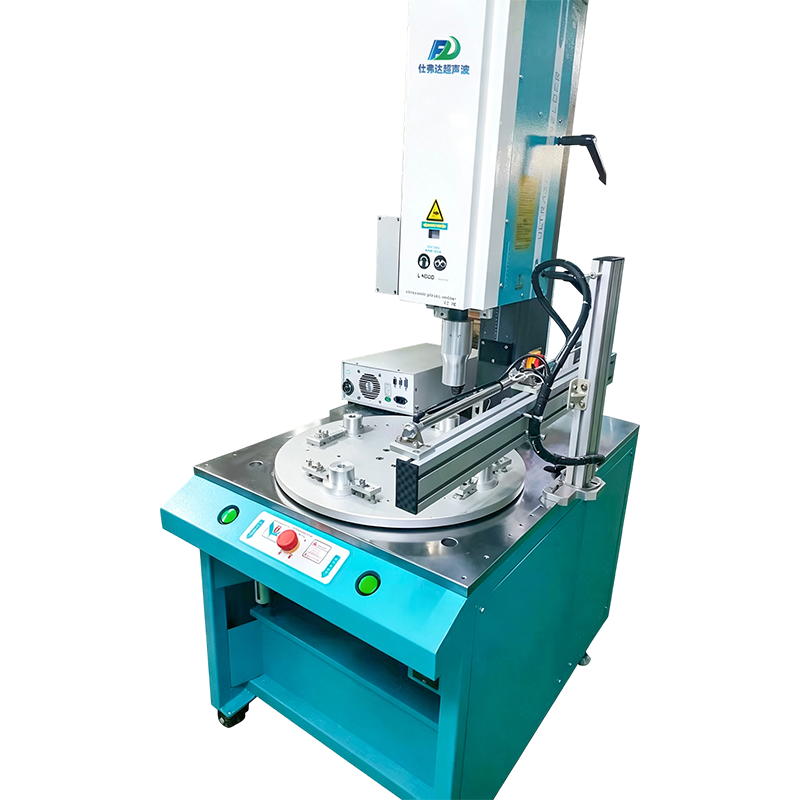 High-Power Ultrasonic Welding Machine for Thick Plastic PartsThis machine addresses tooling-related process control by offering higher output power and precise digital adjustments, making it relevant for large, thick-walled parts where consistent weld strength is critical in regulated industries.View Product →
Vertical Experience Changes Your Risk Profile
Process control matters most in regulated or safety-critical industries, where a weak weld or a contaminated surface creates a recall rather than a simple scrap part. Vertical experience tells you whether the supplier has solved problems like yours before.
Medical Consumables
Medical devices demand tight control of flash, particulates, seal strength, and documentation. An automation equipment manufacturer that builds blood return needle assembly welding equipment has already worked through the tolerance stack-ups of small, thin-walled parts. Blood return needles, drip chambers, guide wire sheaths, and pipettes are unforgiving: the weld zone is often a fraction of a millimeter thick, so flash and bond strength are measured in microns and grams. Equipment designed without attention to part support and clamp force produces intermittent failures that are nearly impossible to trace. Before you order a drip chamber assembly line or a negative pressure drainage bag welding machine, ask for references from the medical device industry and for weld parameter logs that can support your process validation.
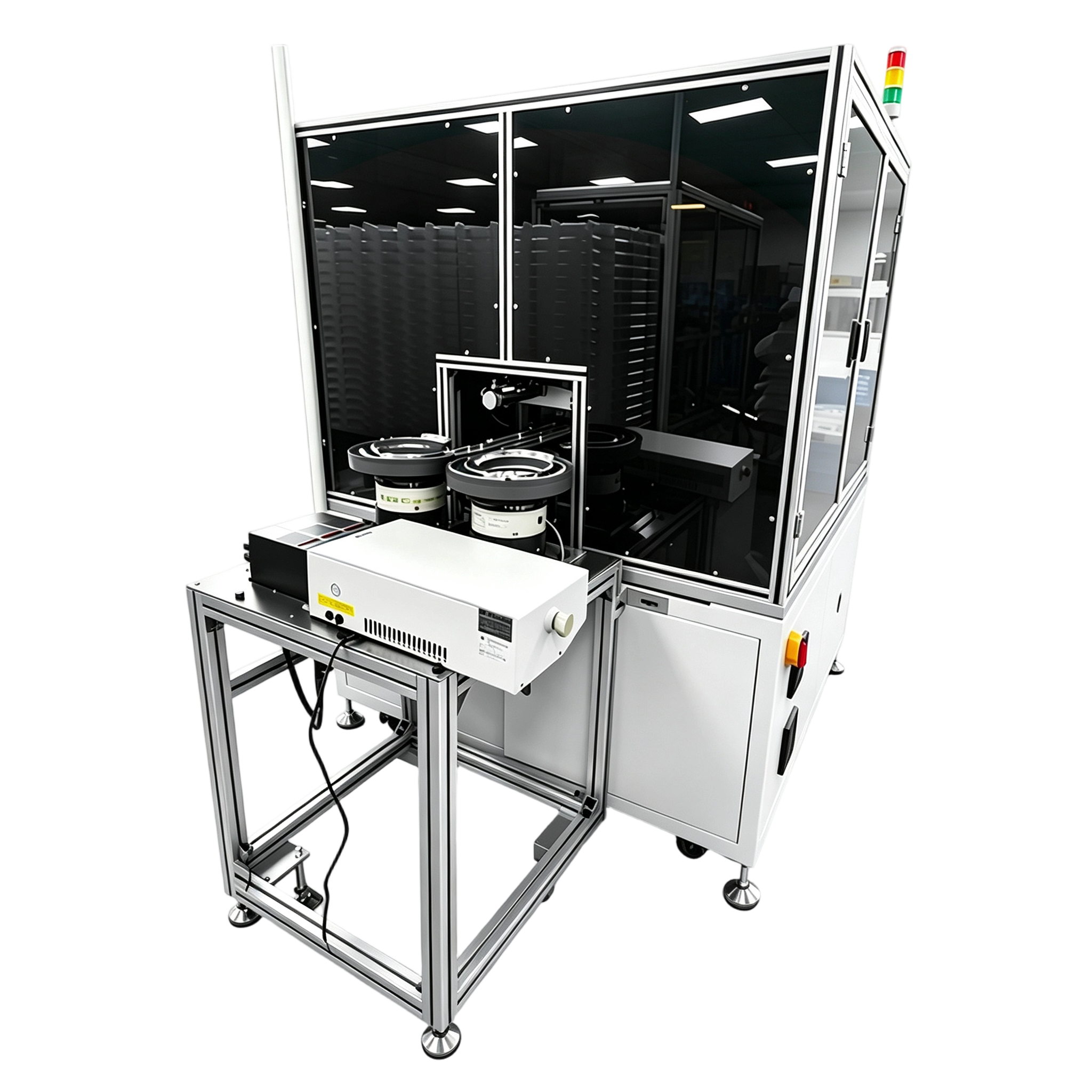 Automated Blood-Return Needle Assembly and Welding EquipmentPurpose-built for medical devices, this equipment integrates assembly and welding with sealing checks, supporting cleanroom operation and stable batch quality—key concerns for suppliers seeking validated process references.View Product →
Water Treatment and Membrane Filtration
Membrane elements are welded, rolled, and sealed under tight dimensional control, and the equipment that makes them must protect delicate membrane surfaces from damage. A supplier with an industrial RO membrane rolling production line has specific knowledge about membrane handling, tension control, and seam quality. For landfill leachate and industrial wastewater, DTRO membrane welding equipment must create seams that resist high operating pressures and aggressive chemistry. On the production side, fully automatic RO membrane rolling lines control winding tension, glue application, and outer wrapping so that element performance stays consistent across batches. If a supplier cannot show these machines running, they are unlikely to improve your membrane quality. Buyers across the environmental industry should hold every equipment candidate to that same standard.
 Fully Integrated Industrial RO Membrane Rolling Production LineA complete line of eight machines covering cutting, rolling, trimming, and testing, compatible with multiple membrane sizes. Relevant for environmental buyers needing consistent element performance and verifiable production equipment.View Product →
Automotive and General Assembly
Automotive projects usually involve interior components, clips, and surface preparation before adhesive bonding. A manufacturer that builds custom vacuum plasma surface treatment systems for automotive interior parts has learned how to match surface energy to adhesives and coatings. In lighter assembly work, the same process discipline applies to ultrasonic welds and heat staking for consumer goods, cosmetics, and packaging.
The Custom Equipment Question
Most buyers get into trouble on non-standard automation because cost overruns and schedule slips come from hidden design risk. A disciplined supplier will identify which modules are proven and which require new engineering, then separate the budget accordingly.
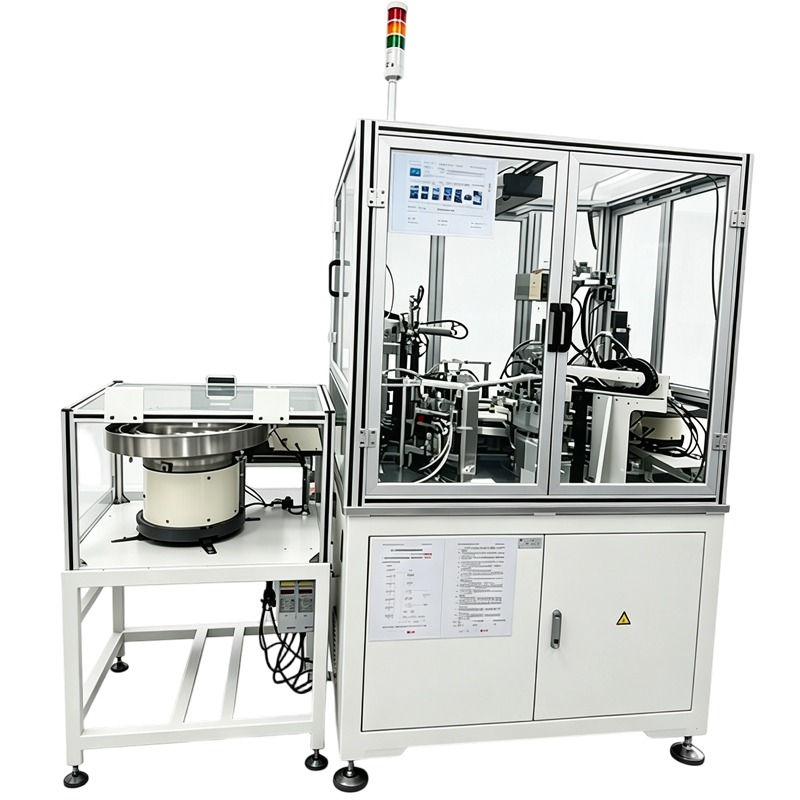
A custom machine such as an automatic hot riveting system or a culture bottle welding and cap-screwing station carries two types of risk. Process risk is whether the joining or test method actually works on your parts; mechanical risk is whether feeding, clamping, and indexing hold cycle time and changeover targets. Ask how many design reviews the supplier runs, whether they build a trial fixture before the full line, and how they measure part-to-part variation during the factory acceptance test.
Experienced suppliers also give you a risk register that names the unproven elements of the machine and the mitigation plan for each one. If a supplier cannot name its own technical risks, expect surprises during commissioning.
Procurement Risks Hiding in the Fine Print
Three risks rarely appear in the quotation but frequently land on the production floor.
- Tooling dependency: Jigs and fixtures machined to a proprietary interface lock you to the original builder. Ask whether tooling drawings are released to you and whether a local machine shop can rework them.
- Validation documentation: In medical and automotive work, ask for weld parameter logs, calibration certificates, and IQ/OQ support. Suppliers experienced in medical consumable equipment usually provide these; pure machine builders may not.
- Service response: Check mean time to repair, spare parts policy, and remote diagnostics. Ask how quickly the supplier can ship a replacement generator, solenoid, or control PCB.
Total cost of ownership calculations should include energy consumption, rejection rates after six months, and the labor cost of manual operations that remain. A machine that needs a dedicated technician every shift, or that drifts out of tolerance after tooling wear, is more expensive than its purchase price suggests.
A Practical Checklist for Shortlisting Automation Equipment Manufacturers
Keep the list short and verify each point in writing.
- Confirm that the joining process you need is a core capability, not an outsourced accessory.
- Ask for application references in your exact industry, then call at least one.
- Verify that tooling, jigs, and fixture design are done in-house.
- Run the factory acceptance test with your parts, your operators, and your success criteria.
- Put service response, spare parts, and documentation requirements into the purchase contract.
The most reliable automation equipment manufacturer is the one you can hold accountable for the process, not just the mechanics. Start with process capabilities and vertical experience, keep the shortlist small, watch the factory acceptance test with your own parts, and convert technical commitments into measurable acceptance criteria. That discipline is what keeps automated production running at the quality level you promised your customers.
PREV:How to Evaluate Ultrasonic Welding Machine Manufacturers Before You Buy
NEXT:What to Look for in an Automation Equipment Factory: Process, Proof, and Support
NEXT:What to Look for in an Automation Equipment Factory: Process, Proof, and Support
NEWS
News & Updates
-
A production engineer at a medical device plant receives three quotes for an automatic assembly mac...
READ MORE -
A purchase engineer sends the same three drawings to five suppliers and gets quotes back between US...
READ MORE -
When a purchasing team shortlists ultrasonic welding machine manufacturers, the natural instinct is...
READ MORE -
On the floor of a mid-sized medical device plant, the bottleneck is rarely a single machine. It is ...
READ MORE
 Ready To Customise
Your Products?
-
Kunshan Shifuda Automation Technology Co., Ltd.
-
Quick Links
Home Products About Us Application News Contact Us -
Product Categories
Water Treatment Membrane Filtration Equipment Logistics and Transportation Equipment Medical Consumables Equipment Ultrasonic Welding Machine Non-standard customization Plasma Cleaning Machine -
Contact Us

Mobile: +86 15821087903

Tel: +86 0512-36839705

Email: kellymeng@sfdauto.com

Add:No. 53, Changshun Road, Zhangpu Town, Kunshan City
Copyright © 2026 by
Kunshan Shifuda Automation Technology Co., Ltd.
All Rights Reserved.
Custom Industrial Automation Welding Equipment Manufacturers
