


 English
 عربى


NEWS
Home / News / Industry News / How to Choose the Right Ultrasonic Welding Machine Supplier for Your Factory
How to Choose the Right Ultrasonic Welding Machine Supplier for Your Factory
Content
You have received three quotations for an ultrasonic plastic welder. The frequencies look similar, the power levels overlap, and every sales engineer promises responsive after-sales support. Yet the total prices differ by more than 40 percent. Which supplier should you actually trust with your production line?
The short answer is: choose the one that can prove its process capability, not just its machine specifications. Ultrasonic welding failures rarely come from the generator or transducer alone. They usually come from poor horn design, unstable tooling, inconsistent part alignment, and a lack of application engineering. That is why evaluating suppliers requires a broader checklist than comparing wattage and price.
Why Supplier Evaluation Goes Beyond the Machine Price
An ultrasonic welding machine is only one part of a stable welding process. The same power supply and stack can produce excellent welds on one part and constant rejections on another if the fixture, horn amplitude, and joining geometry are not matched to the material and the part design. A supplier that sells you a standard machine without understanding your part geometry, plastic type, wall thickness, and required cycle time is setting you up for long debug sessions later.
Experienced suppliers reduce that risk in the quotation phase. They ask about your material, joint design, allowable witness line, leak test requirements, and production volume. They also explain how they will adapt their standard machine with jigs, fixtures, and automation. When you evaluate quotations, look for evidence of this level of engagement rather than a generic datasheet.
| Evaluation Dimension | What to Check | Why It Matters |
|---|---|---|
| Process support | Does the supplier ask for drawings or sample parts? | Proper joint design and amplitude selection depend on your part geometry. |
| Tooling capability | Does the supplier design and make its own horns and jigs? | In-house tooling shortens iteration cycles and preserves weld consistency. |
| Automation integration | Can the machine be integrated with an assembly line? | A bench welder may need conveyor, sensors, and pick-and-place units later. |
| Industry experience | Has the supplier worked in your industry before? | Industry-specific knowledge avoids common problems in medical, automotive, or packaging parts. |
Core Technical Capabilities to Verify
Every credible ultrasonic welding machine supplier can name the main components: power supply, converter, booster, horn, and fixture. But a reliable supplier also verifies the actual weld parameters with a trial. Ask how they determine frequency, amplitude, trigger force, weld time, and hold time. A supplier with a genuine engineering team will not just repeat the plastic manufacturer's general recommendations; they will run tests on your specific parts and adjust the stack to produce consistent weld strength.
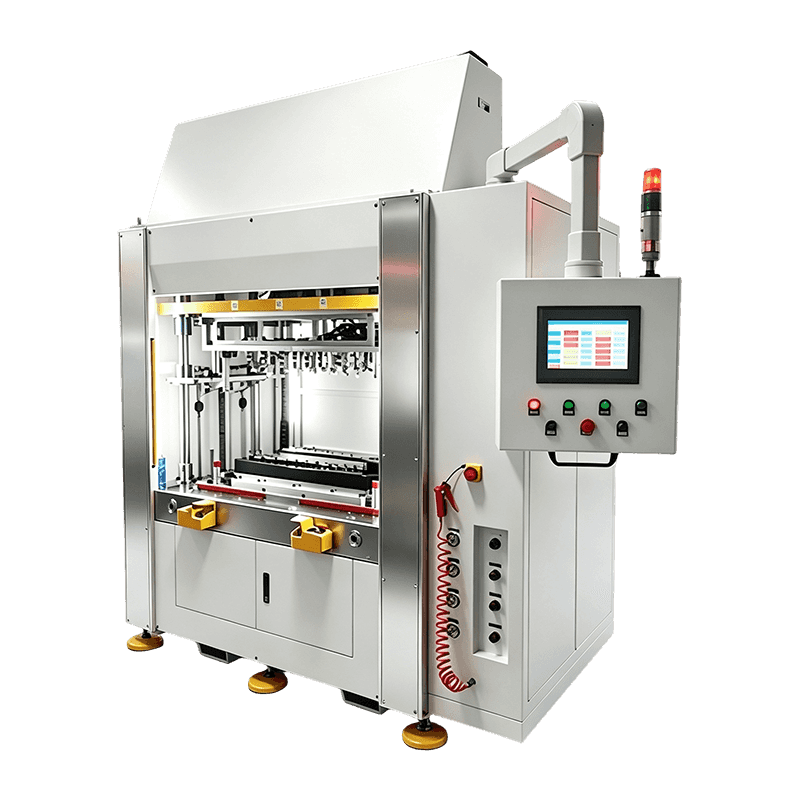
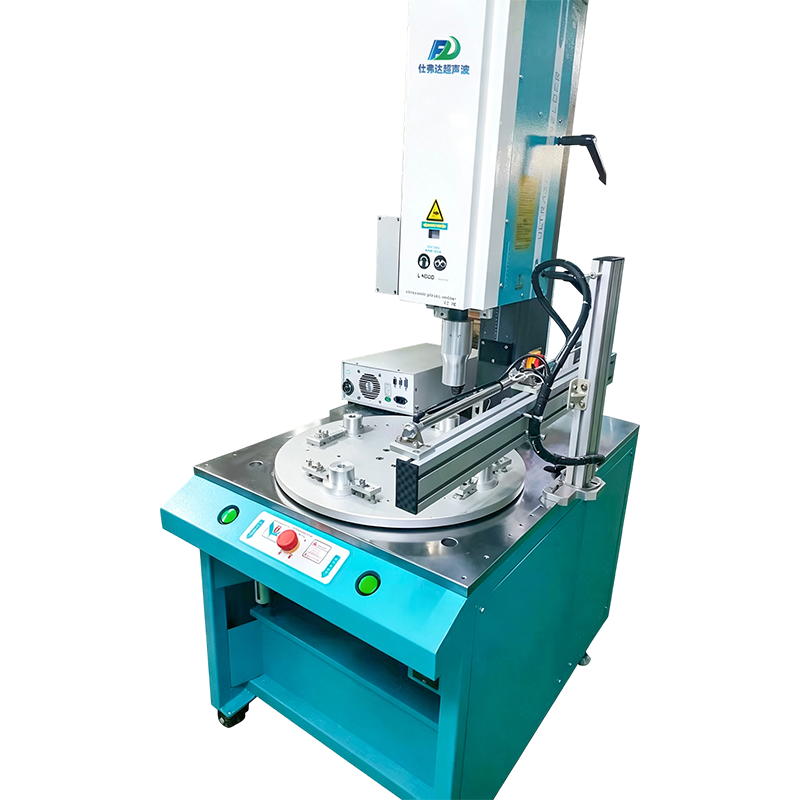 High-Power Ultrasonic Plastic Welding Machine with Digital ControlsThis high-output welder suits large, thick-walled plastic parts and offers frequency options from 15 to 40 kHz, plus a digital touchscreen with fine parameter adjustment. Its overload protection supports consistent, extended production.View Product →
Also confirm the machine's flexibility. For small medical devices you may need lower amplitude and precise trigger repeatability. For larger automotive interior parts you may need higher power and longer weld time. The supplier should be able to configure frequency, power, and stroke range to match the application, not force you into a one-size-fits-all model.
- Check that the generator offers closed-loop amplitude control.
- Ask about calibration intervals and how the supplier ensures reproducibility.
- Request a weld test on your own parts before purchase.
The Role of Jigs and Tooling in Weld Quality
Even the best ultrasonic welding machine cannot compensate for a poorly designed jig that allows lateral movement or inconsistent clamping force. Tooling is often overlooked when comparing suppliers, but it has a direct impact on flash, weld strength, and dimensional consistency. A reputable supplier designs the jig around the part's weld line, locating features, and support points. They also consider how easy it is to load and unload the part in a cycle.
 Custom Assembly Jig Built to Your Part SpecificationsThis made-to-order jig is designed around your drawings or sample parts, with clamping points and trial-fit checks to avoid distortion. It suits complex geometry and helps ensure accurate, repeatable positioning.View Product →
Ask your potential supplier whether they build their own assembly jigs and precision fixtures in-house. When tooling is outsourced, communication gaps can delay the project and compromise tolerance. An integrated supplier can iterate rapidly if your part design changes after initial tests, and they can also provide quick-change production jigs that reduce changeover time between product variants.
What a Good Jig Drawings Package Should Include
- Reference points aligned with the part's critical dimensions
- Clamping force calculations that avoid part deformation
- Material selection for the horn contact area to prevent wear
- Venting and cooling channels for high-cycle production
Automation and Industry-Specific Experience
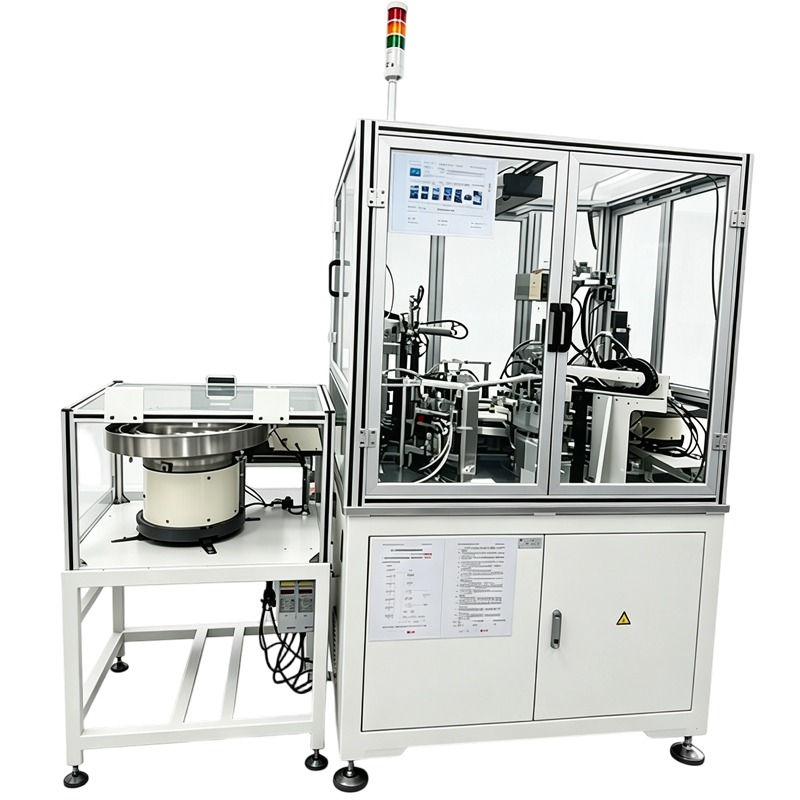
Many factories start with a manual bench welder and later realize they need rotary indexing tables, conveyors, vision inspection, or full assembly lines. A supplier that only delivers a standalone ultrasonic welder without automation experience can become a bottleneck when you scale production. Look for a partner that understands how to integrate the welder with feeding, orienting, and testing systems, especially if you are in a regulated industry with strict traceability requirements.
 Precision Positioning Jig for Automated Welding LinesThis jig holds workpieces at a fixed datum point to prevent misalignment during repeated loading. Its contour-matched clamping and stop blocks reduce setup time and weld defects, ideal for automated assembly lines.View Product →
Industry experience matters beyond machine integration. In medical device assembly, for example, the concern is often flash-free welds and repeatable joint strength across thousands of sterile products. In automotive manufacturing, the concern is cycle time and the ability to handle large, thin-walled parts without sinking or cosmetic marks. A supplier who has solved these problems before can save you months of trial and error.
Red Flags When Comparing Suppliers
Several warning signs should make you pause. A supplier that quotes a machine without asking about your plastic type or part design is either guessing or planning to rely on generic parameters. A supplier that cannot provide sample weld results or existing customer case studies may lack practical experience. Another red flag is a very low price that includes no on-site installation, no weld testing, and no tooling adjustment.
- No request for drawing files or physical samples before quoting
- No mention of horn design or amplitude verification
- A delivery time that seems too good to be true for a custom machine
- No local support or clear hotline for troubleshooting
- No documentation for machine safety or maintenance procedures
Remember also to check how the supplier handles spare parts. Ultrasonic welding machines depend on replaceable components such as booster, horn, generator boards, and transducers. Ask about lead times for common spare parts. A supplier with an in-house engineering team and a stable service network is more likely to keep your line running when a component fails unexpectedly.
How to Begin the Conversation
The best way to shortlist ultrasonic welding machine suppliers is to involve them early. Send your part drawing, material grade, and production volume expectations. Ask each supplier to recommend a machine configuration and to explain how they would approach the weld joint. You can also request a complete guide to ultrasonic welding fundamentals to make sure you are using common terminology and metrics during discussions.
Once you have the recommendations, compare them side by side. Look at the total cost of ownership, including tooling, installation, training, and after-sales response. A supplier that offers a slightly higher quotation but includes weld trials, custom jigs, and application support may be the better long-term choice for your factory. Consider visiting the supplier or performing a remote live test with your own parts. The goal is to verify not just the machine, but the engineering thinking behind it.
Selecting an ultrasonic welding machine supplier is not a transaction; it is a partnership that affects your product quality and production uptime. Focus on process capability, tooling expertise, automation integration, and proven industry experience. When you compare quotations with these criteria in mind, you will likely find that the cheapest machine is not the most economical solution in the long run.
PREV:Automation Equipment Factory: How to Choose, Scope, and Qualify a Build Partner
NEXT:How to Evaluate Ultrasonic Welding Machine Manufacturers Before You Buy
NEXT:How to Evaluate Ultrasonic Welding Machine Manufacturers Before You Buy
NEWS
News & Updates
-
When a purchasing team shortlists ultrasonic welding machine manufacturers, the natural instinct is...
READ MORE -
In short: an ultrasonic welding machine joins materials by converting high-frequency electrical ener...
READ MORE -
When a production engineer watches a new ultrasonic welding station reject 12 percent of thin-walle...
READ MORE -
A purchase engineer sends the same three drawings to five suppliers and gets quotes back between US...
READ MORE
 Ready To Customise
Your Products?
-
Kunshan Shifuda Automation Technology Co., Ltd.
-
Quick Links
Home Products About Us Application News Contact Us -
Product Categories
Water Treatment Membrane Filtration Equipment Logistics and Transportation Equipment Medical Consumables Equipment Ultrasonic Welding Machine Non-standard customization Plasma Cleaning Machine -
Contact Us

Mobile: +86 15821087903

Tel: +86 0512-36839705

Email: kellymeng@sfdauto.com

Add:No. 53, Changshun Road, Zhangpu Town, Kunshan City
Copyright © 2026 by
Kunshan Shifuda Automation Technology Co., Ltd.
All Rights Reserved.
Custom Industrial Automation Welding Equipment Manufacturers
