


 English
 عربى
عربى


NEWS
Home / News / Industry News / What to Look for in an Automation Equipment Factory: Process, Proof, and Support
What to Look for in an Automation Equipment Factory: Process, Proof, and Support
Content
On the floor of a mid-sized medical device plant, the bottleneck is rarely a single machine. It is the space between two stations: where a molded drip chamber must be welded to plastic tubing, leak-checked, and handed to the next operation without a single missed cycle. A production manager searching for an automation equipment factory is really looking for someone who understands that whole process, not merely a supplier who can deliver a robot arm and a control cabinet.
The conclusion holds across industries: the right automation equipment factory is selected by process depth, documented engineering, and after-sales response, in that order. Price matters, but it is usually not what separates a project that delivers from a project that stalls.
What an Automation Equipment Factory Actually Builds
An automation equipment factory is not a parts distributor. It is a design-and-build organization that turns a specific part, a process window, and a production target into a working machine or line. Before comparing quotations, clarify which of these capabilities you actually need:
- Stand-alone machines that perform one operation, such as ultrasonic welding, heat staking, or plasma treatment.
- Semi- and fully automated assembly lines that combine feeding, orienting, assembly, welding, and inspection in one system.
- Peripheral tooling such as positioning fixtures, quick-change jigs, and custom grippers that determine real changeover time.
- In-line verification including leak testing, force testing, and dimensional or surface checks integrated into the cycle.
Manufacturers like Kunshan Shifuda Automation Technology operate across this full range, from ultrasonic plastic welding machines to multi-station medical consumables assembly systems. The practical benefit is single-source accountability: one supplier owns the interfaces between stations instead of leaving the customer to integrate several vendors on site.
Process Coverage: The First Filter for Any Automation Equipment Factory
A credible automation factory must control the processes that the product requires, and it must prove that control with data. Plastic joining alone spans multiple technologies, and each leaves a different footprint on the part.
| Process | Typical applications | What to verify from the builder |
|---|---|---|
| Ultrasonic welding | Pipettes, catheters, filters, housings | Amplitude and pressure control; joint design support |
| Hot melt / hot plate welding | Drainage bags, culture bottles, larger parts | Temperature uniformity and repeatable cycle time |
| Hot riveting / heat staking | Automotive clips, assembled sub-components | Force and time windows; pull-test records |
| High-frequency welding | Films, membrane elements, tarpaulins | Dielectric compatibility; seam consistency |
| Plasma treatment | Automotive interior parts, medical catheters | Wettability results; treatment uniformity |
| Leak and function test | Membrane welds, sealed bags, filter cartridges | Calibration of test pressure and data traceability |
The risk pattern is consistent. A factory that offers only one process will try to bend the part design to fit its equipment. A factory with a wider process base can recommend the most reliable method, or combine processes, when the first approach does not meet cycle or quality targets. For buyers who are new to the process, the mechanics are worth reviewing before you write a specification; a practical guide to how ultrasonic welding works explains the variables that appear in every machine trial.
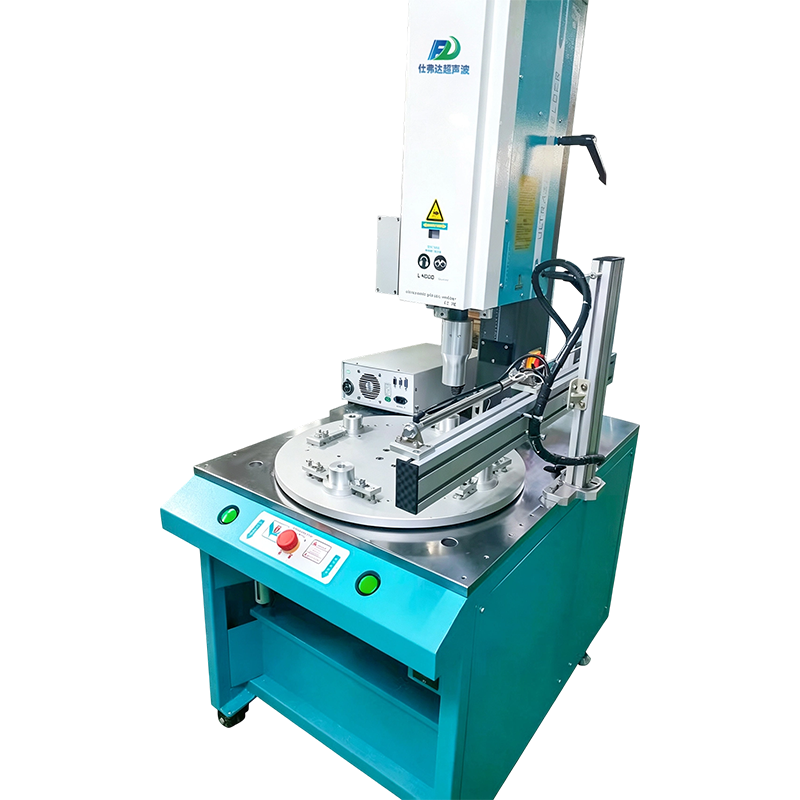 High-Power Ultrasonic Plastic Welding Machine for Large PartsThis machine is positioned for buyers comparing ultrasonic welding capabilities. It emphasizes high output, digital frequency control, and precise parameter adjustment, directly supporting the article's advice to demand actual process data.View Product →
Ask for actual process data: weld time, amplitude, pressure, and the resulting joint strength from production trials on your own parts. That is the fastest way to separate an equipment factory from an equipment assembler.
Industry Experience Changes Project Risk
Process coverage tells you what a factory can do; industry experience tells you what it has already solved. That distinction shortens project risk considerably, because the failures most likely to hurt your launch are not technical novelties. They are overlooked material behaviors and regulatory expectations in your specific sector.
In medical consumables, for example, a drainage bag welding system must handle thin film without flash, produce leak-free seams, and maintain clean-room-friendly material handling. A factory that builds general welding machines will struggle with these constraints, while one that has delivered medical assembly equipment repeatedly will design the fixture around the film behavior from the first revision. Medical device automation experience covers this kind of recurring engineering, from pipette assembly welding to drip chamber assembly stations.
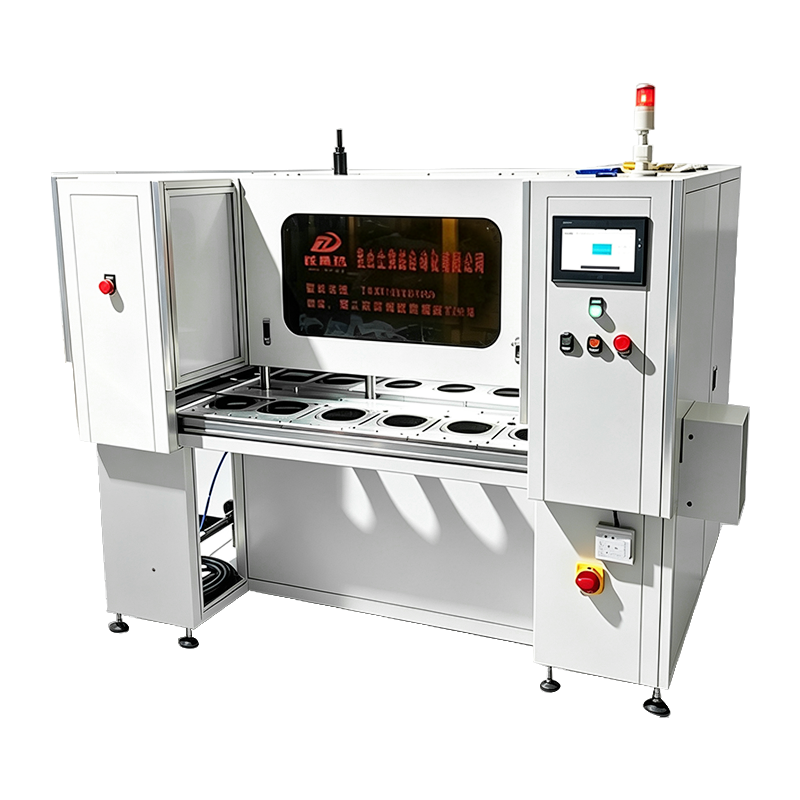 Continuous Negative-Pressure Drainage Bag Welding EquipmentFor medical consumable production, this equipment integrates film tension control and continuous sealing to produce leak-free seams. It suits buyers needing clean-room-friendly handling and downstream automation for soft-film bags.View Product →
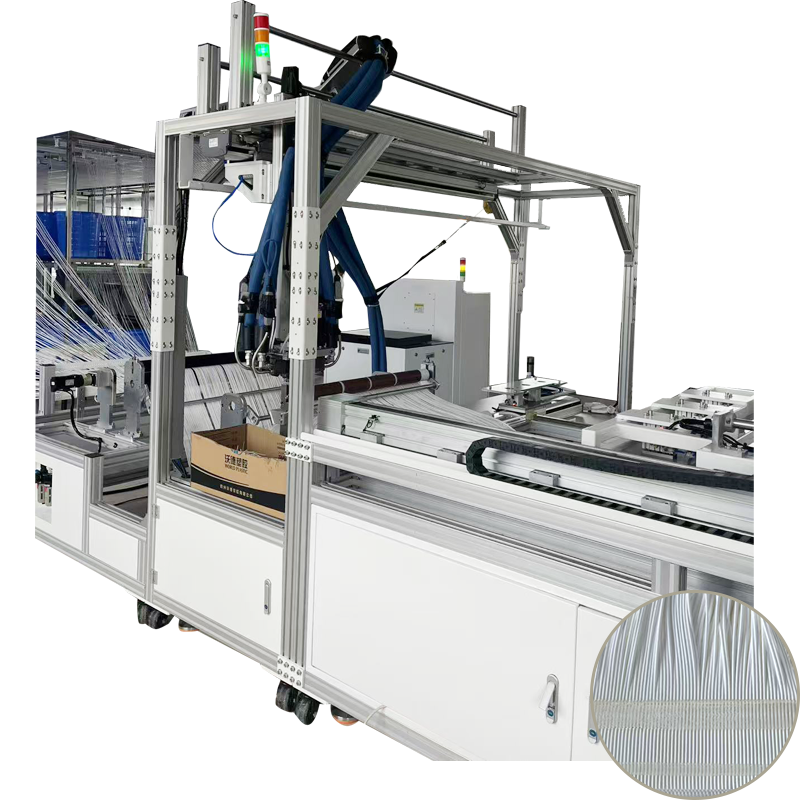
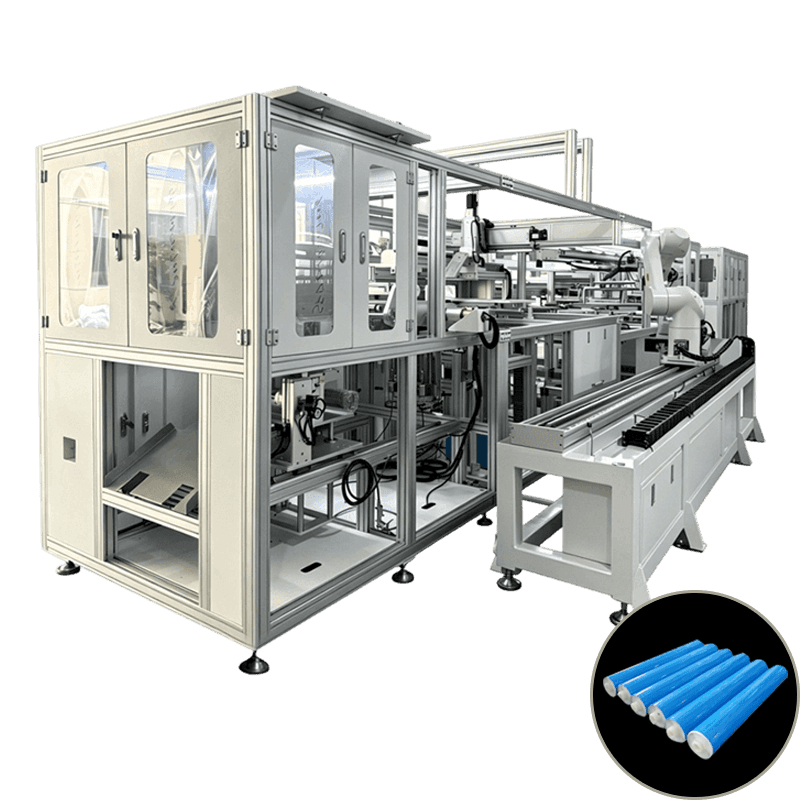
Environmental technology places different demands. Water treatment membrane elements require long weld seams on dimensionally sensitive films, plus controlled rolling and winding that affects flux performance. Factories serving this niche, such as Shifuda's water treatment equipment range, combine membrane welding with winding and leak test processes rather than treating welding as an isolated step.
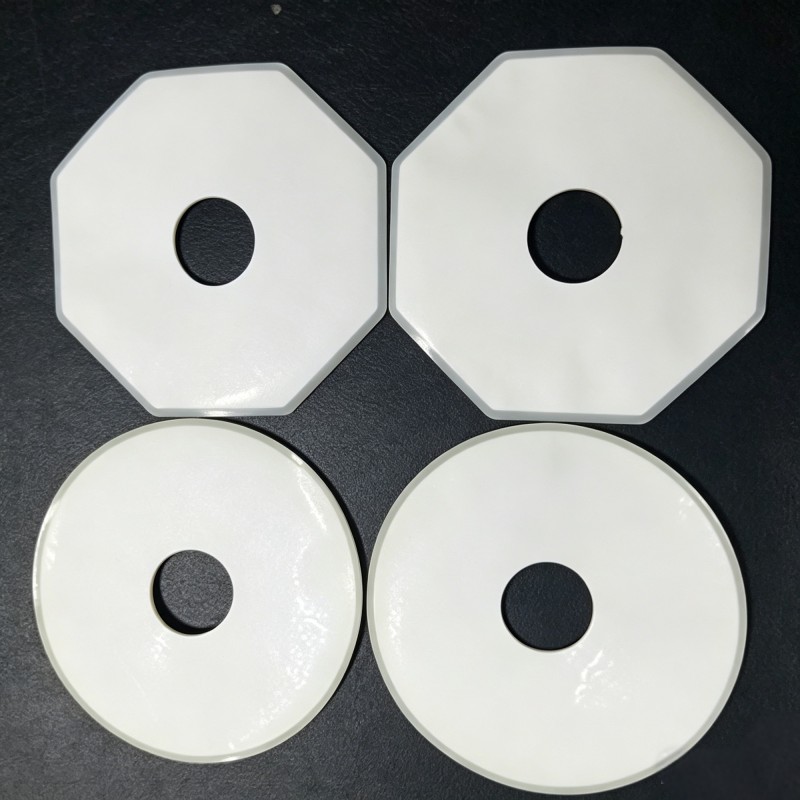 Fully Automatic DTRO Membrane Welding Machine with Zero ConsumablesTailored for water treatment membrane elements, this machine offers rapid mold change between circular and octagonal diaphragms, automated welding and inspection, and single-operator multi-unit capability—key factors for membrane production efficiency.View Product →
| Industry | Typical automation emphasis | Common failure mode to avoid |
|---|---|---|
| Medical consumables | Assembly and welding of small parts; traceability | Weld flash and particle contamination |
| Automotive | Interior surface treatment, clip assembly, testing | Poor surface preparation before bonding |
| Water / environmental | Membrane welding, rolling, winding, leak test | Uneven seam or damaged membrane layer |
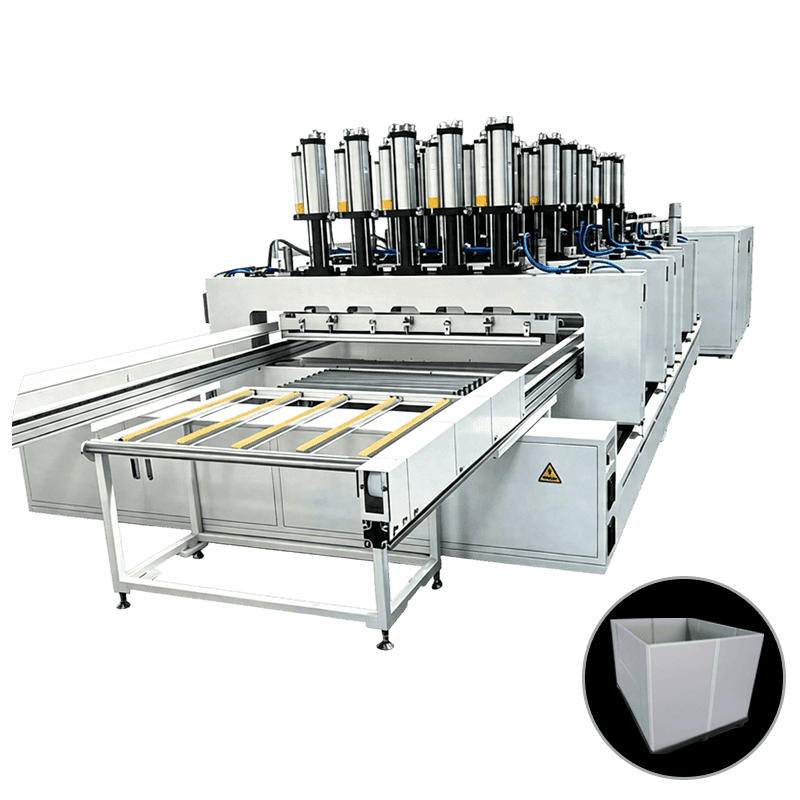
| Packaging and logistics | Blister forming, sealing, pallet box assembly | Cycle time driven by handling, not processing |
When a supplier can point to installed machines in your own industry, ask for production records rather than marketing photos. The number of similar lines delivered, the defects per million observed after ramp-up, and the changeover time between product variants are the metrics that translate into your cost per part.
Practical Audit Criteria for an Automation Equipment Factory
When you audit a factory, either on site or through detailed documentation requests, look beyond the assembly hall. These criteria consistently separate capable builders from order-takers:
- Engineering documentation. Does the factory provide cycle time analysis, risk assessment, and machine acceptance criteria in writing before the order?
- Process validation. Can it show test reports from actual production runs with the customer's own parts?
- Build quality. Inspect cable routing, guarding, pneumatic labeling, and PLC program structure. These details predict maintenance costs.
- In-house verification equipment. Leak test stations, flatness detection, and contact angle measurement instruments indicate a factory that proves its work instead of assuming it.
- Service structure. How many service engineers, what response time for your region, and what spare parts policy applies after acceptance?
- Custom tooling capability. Fixtures and jigs are often the real bottleneck in changeover; a factory that designs them in-house has a clear advantage.
Questions to Ask Before You Place an Order
Use the evaluation conversation to force the supplier to commit to specifics. The following list has proven reliable in comparing automation equipment factories:
- Which assembly or welding process do you recommend for this material pair, and what is your backup process if the first one fails qualification?
- How many similar machines or lines have you built for my industry in the past three years, and who can I contact as a reference?
- What is the guaranteed cycle time, and which station or motion is the bottleneck?
- How does the machine handle rejects, and is leak, force, or dimensional testing integrated into the cycle?
- What documentation is delivered with the machine, including validation protocol, operation manual, and electrical and pneumatic schematics?
- What after-sales response time do you guarantee for our production region, and what spare parts are stocked locally?
An automation equipment factory is only as good as the first machine it builds for you. Selecting one on process depth, industry evidence, and service structure, rather than on price alone, turns a procurement decision into a production strategy. The right partner is not the one with the broadest catalogue, but the one whose process windows, engineering records, and support commitments match the exact requirements you need to control on every shift.
PREV:No previous article
NEXT:Ultrasonic Welding Machine: The Complete Guide to How It Works, Types & Applications
NEXT:Ultrasonic Welding Machine: The Complete Guide to How It Works, Types & Applications
NEWS
News & Updates
-
What Buyers Need From Spiral Wound Membrane Element Machine Suppliers and Related Equipment Sources...
READ MORE -
As a core separation component in the water treatment field, RO (Reverse Osmosis) membranes have ex...
READ MORE -
Industrial RO Roll Film Machine: Versatile Applications and Key Characteristics In the vast landscap...
READ MORE -
Industrial RO Membrane Rolling Machine: Features and Innovations In the rapidly evolving water treat...
READ MORE
 Ready To Customise
Your Products?
-
Kunshan Shifuda Automation Technology Co., Ltd.
-
Quick Links
Home Products About Us Application News Contact Us -
Product Categories
Water Treatment Membrane Filtration Equipment Logistics and Transportation Equipment Medical Consumables Equipment Ultrasonic Welding Machine Non-standard customization Plasma Cleaning Machine -
Contact Us

Mobile: +86 15821087903

Tel: +86 0512-36839705

Email: kellymeng@sfdauto.com

Add:No. 53, Changshun Road, Zhangpu Town, Kunshan City
Copyright © 2026 by
Kunshan Shifuda Automation Technology Co., Ltd.
All Rights Reserved.
Custom Industrial Automation Welding Equipment Manufacturers
