


 English
 عربى


NEWS
Home / News / Industry News / Automation Equipment Manufacturer: Practical Applications, Selection, Performance, and
Automation Equipment Manufacturer: Practical Applications, Selection, Performance, and
Content
A production engineer at a medical device plant receives three quotes for an automatic assembly machine. One quote is 40 percent lower than the others, but the supplier cannot explain how it will control weld depth on a thin-walled drip chamber. The second supplier asks for a pilot run and promises welded samples within two weeks. The third sends a glossy catalog and asks only for the part drawings. Which supplier deserves the purchase order?
The short answer, confirmed by years of industrial practice: choose the automation equipment manufacturer that demonstrates process knowledge, in-house engineering, application experience, and after-sales service — not the one with the lowest price or the widest catalog. A machine is just a frame, a controller, and a set of actuators until somebody who understands your material, tolerance, and cycle time makes it run. This article explains what a serious equipment manufacturer should deliver, the criteria that separate good investments from expensive mistakes, and the questions to ask before you commit.
What an Automation Equipment Manufacturer Should Deliver
A genuine automation equipment manufacturer does more than assemble purchased components and bolt on a robot. It designs process equipment, integrates handling and inspection, and builds the tooling that makes the system repeatable. In practice, deliveries fall into four categories.
| Category | Typical examples | What to evaluate | Common buying mistake |
|---|---|---|---|
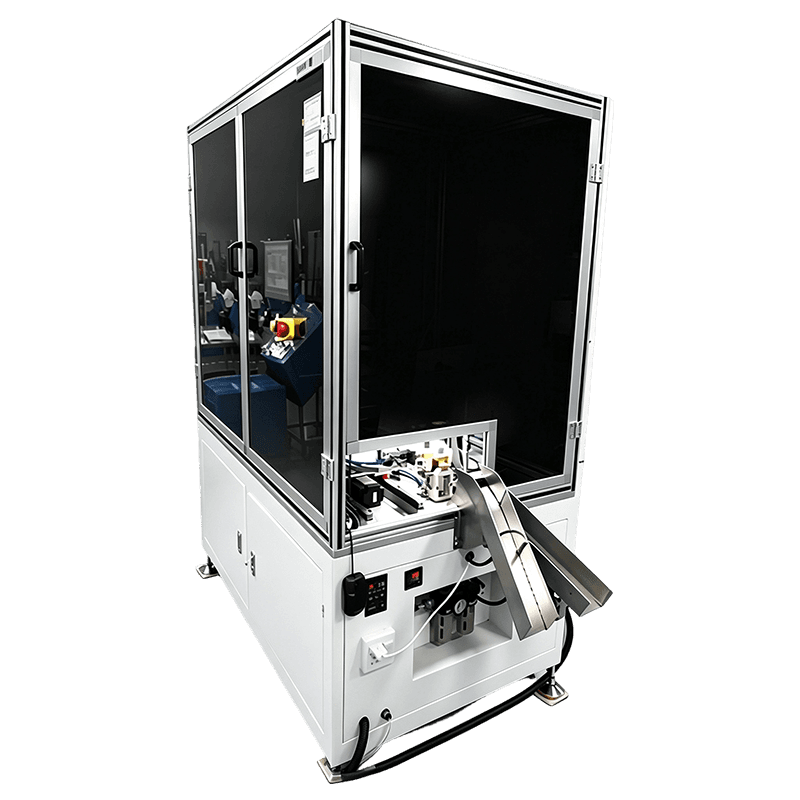
| Standard process machines | Ultrasonic plastic welders, plasma cleaning systems | Weld depth control, energy and force monitoring, electrode life | Treating them as commodity tools with no process support |
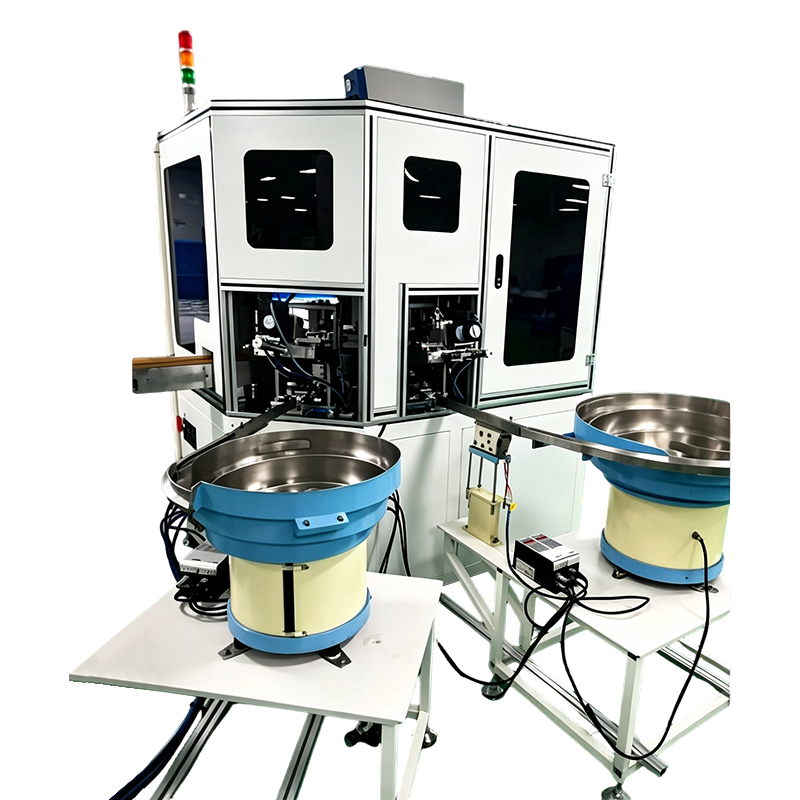
| Non-standard custom machines | Hot-staking stations, screw-driving stations, leak-testing stations | Fixture precision, part-family coverage, reject handling | Rejecting a capable builder because the frame looks "non-standard" |
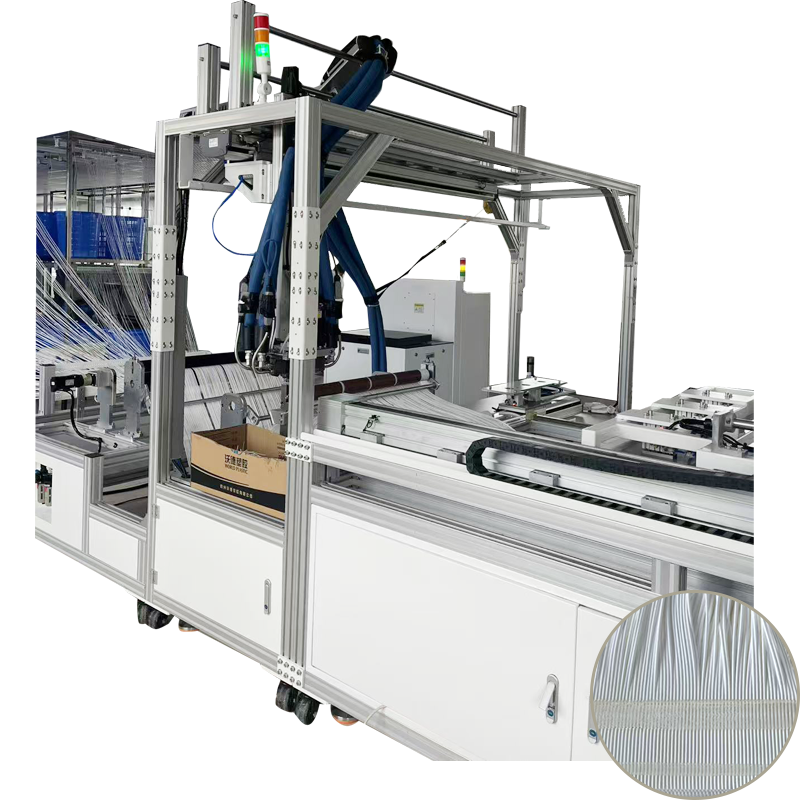
| Fully automatic lines | Filter membrane winding and welding lines, pipette assembly and welding lines, catheter assembly systems | Cycle time balance, buffer sizing, PLC and MES data output | Underestimating commissioning time and ramp-up |
| Fixtures, jigs, and tooling | Positioning fixtures, quick-change work holders, general-purpose nests | Hardening, dimensional accuracy, changeover speed | Forgetting replacement cost and lead time |
A manufacturer that offers several joining technologies — ultrasonic welding, hot plate and hot melt, hot staking, high-frequency welding — together with plasma treatment, assembly stations, and inspection equipment can be held accountable for the entire process. When weld quality drifts, the supplier cannot blame a third-party machine builder. That is a practical advantage, especially in industries with strict quality records.
Six Criteria That Separate a Good Automation Equipment Manufacturer from a Risky One
Keep one point in mind before anything else: evaluate the manufacturer the same way the finished machine will be evaluated — on process capability, tolerance, cycle time, validation, changeover, and service. These six criteria predict the return on your investment far better than the sticker price.
- Process knowledge. A supplier that masters multiple joining processes can recommend the right one for your material instead of forcing a single technology. Ultrasonic welding suits semi-crystalline plastics and thin-walled parts; hot plate welding handles large or complex parting lines. The wrong process choice shows up as flash, weak joints, or slow cycles.
- Engineering depth. Ask how much of the machine is designed in-house: frame, electrical cabinet, HMI, and fixtures. A manufacturer with genuine non-standard automation capability adapts standard modules to unusual part geometries; a reseller merely combines brands. Custom engineering also determines whether modifications are implemented in days or not at all.
- Tolerance and repeatability. On a servo-driven ultrasonic welding head, weld depth repeatability is typically within ±0.02 mm, and a sound hot-plate design holds temperature within ±2 °C. If the supplier cannot name the tolerance it controls, or cannot log it, the machine is a gamble.
- Validation and data. A machine is valuable only when it can verify its own work. Look for integrated leak testing, force-displacement curve analysis, vision inspection, and per-part data logging. Ask which parameters are exported — weld energy, depth, time, reject reason — and in what format: CSV, OPC-UA, or direct MES connection.
- Changeover and flexibility. A family of similar parts should change over in under 30 minutes using nests and quick-change tooling. Tool-less clamps and recipe-based parameter storage turn a single-station machine into a multi-part asset.
- After-sales response. Spare parts, documentation, and a trained technical team decide how long an unplanned stop lasts. A manufacturer with a service organization can answer process questions; a trading company can only send an invoice.
Experienced buyers distribute their evaluation effort roughly as shown in Figure 1. Process and engineering dominate because they are the hardest to fix after delivery.
Process knowledge and engineering
30%
Tolerance control and validation
25%
Vertical application experience
20%
After-sales service
15%
Price and delivery lead time
10%
Figure 1. Typical weighting that experienced industrial buyers apply when comparing automation equipment manufacturers.
Why Vertical Application Experience Changes the Outcome
Process knowledge is only half of the story; application experience in your industry is the other half. An automation equipment manufacturer that has built machines for medical consumables knows that a drip chamber weld must be flash-free, because a single protrusion can block flow. A builder used to water-treatment equipment knows that a welded seam on an MBR flat-sheet membrane must hold pressure without damaging the filtration layer. The same joining technology behaves differently on a car interior panel, a blood collection needle, a filter membrane, and a heavy logistics pallet box.
A strong manufacturer's technology map looks like the tree diagram below.
- Joining processes
- Ultrasonic plastic welding — automotive interior parts, medical consumables, packaging
- Hot plate and hot melt welding — large parts, leak-tight pools, filter elements
- Hot staking — inserting metal parts into thermoplastics
- High-frequency welding — sheet materials and membrane assemblies
- Surface treatment
- Atmospheric and vacuum plasma cleaning — adhesion for gluing, labeling, and printing
- Assembly and handling
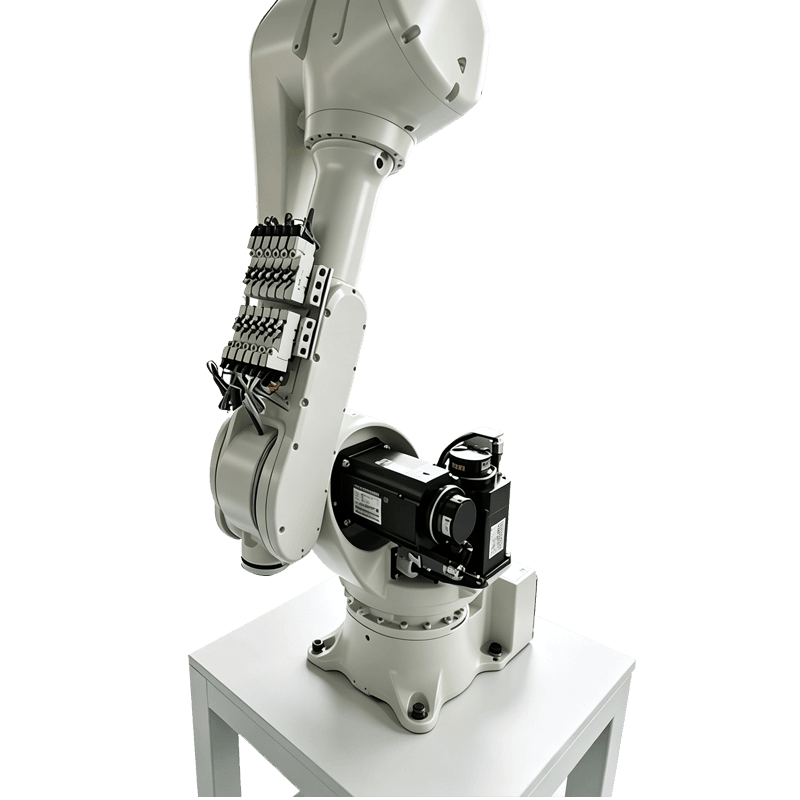
- Pick-and-place, screw driving, press-fit — multi-part assembly and final joining
- Inspection and quality
- Leak testing, force-displacement monitoring, vision — closed-loop quality control
A manufacturer with this kind of technology stack — for example, Kunshan Shifuda Automation Technology Co., Ltd., which builds ultrasonic welders, plasma treatment systems, non-standard assembly machines, and custom tooling for medical, automotive, environmental, and logistics applications — can solve cross-technology problems. If a weld defect is caused by surface contamination rather than welding parameters, the same supplier can validate and correct both steps instead of shifting responsibility.
Questions to Ask Before You Shortlist a Supplier
Use the checklist below during the quotation stage and the factory visit. The answers will separate a real automation equipment manufacturer from a general-purpose machine shop.
- Can you show a similar machine running at the required cycle time in production, not only in a lab demonstration?
- Which parameters are monitored each cycle, and can the machine record them per serial number?
- How long does a changeover between part numbers take, and is it done by an operator or a technician?
- What acceptance criteria define success at factory acceptance test and site acceptance test: scrap rate, repeatability, cycle time, or overall equipment effectiveness?
- What documentation is delivered: electrical diagrams, pneumatic schematics, spare parts list, and a preventive maintenance plan?
- What is the response time for spare parts and on-site support, and where are the service engineers located?
Treat these red flags seriously: quoting without involving an engineer, refusing a process trial on your actual parts, avoiding written tolerance values, and treating documentation as an optional extra. Each red flag predicts delayed commissioning and a machine that never reaches the target yield.
Start with Samples, Then Audit the Factory
Every reliable automation project starts with physical parts. Send production parts to the manufacturer — including rejected and borderline samples — and let its process engineers run welding and assembly trials. Evaluate joint quality, flash, strength, and cycle time on the samples rather than on a presentation chart. Only then move into commercial negotiation.
If the supplier defines tolerances in writing, commits to a commissioning schedule, and provides support after delivery, the investment has a high chance of paying back within the first year. The price tag matters; the process behind it matters more.
PREV:No previous article
NEXT:Automation Equipment Factory: How to Choose, Scope, and Qualify a Build Partner
NEXT:Automation Equipment Factory: How to Choose, Scope, and Qualify a Build Partner


NEWS
News & Updates
-
A purchase engineer sends the same three drawings to five suppliers and gets quotes back between US...
READ MORE -
On the floor of a mid-sized medical device plant, the bottleneck is rarely a single machine. It is ...
READ MORE -
When a production engineer watches a new ultrasonic welding station reject 12 percent of thin-walle...
READ MORE -
What Buyers Need From Spiral Wound Membrane Element Machine Suppliers and Related Equipment Sources...
READ MORE
 Ready To Customise
Your Products?
-
Kunshan Shifuda Automation Technology Co., Ltd.
-
Quick Links
Home Products About Us Application News Contact Us -
Product Categories
Water Treatment Membrane Filtration Equipment Logistics and Transportation Equipment Medical Consumables Equipment Ultrasonic Welding Machine Non-standard customization Plasma Cleaning Machine -
Contact Us

Mobile: +86 15821087903

Tel: +86 0512-36839705

Email: kellymeng@sfdauto.com

Add:No. 53, Changshun Road, Zhangpu Town, Kunshan City
Copyright © 2026 by
Kunshan Shifuda Automation Technology Co., Ltd.
All Rights Reserved.
Custom Industrial Automation Welding Equipment Manufacturers
